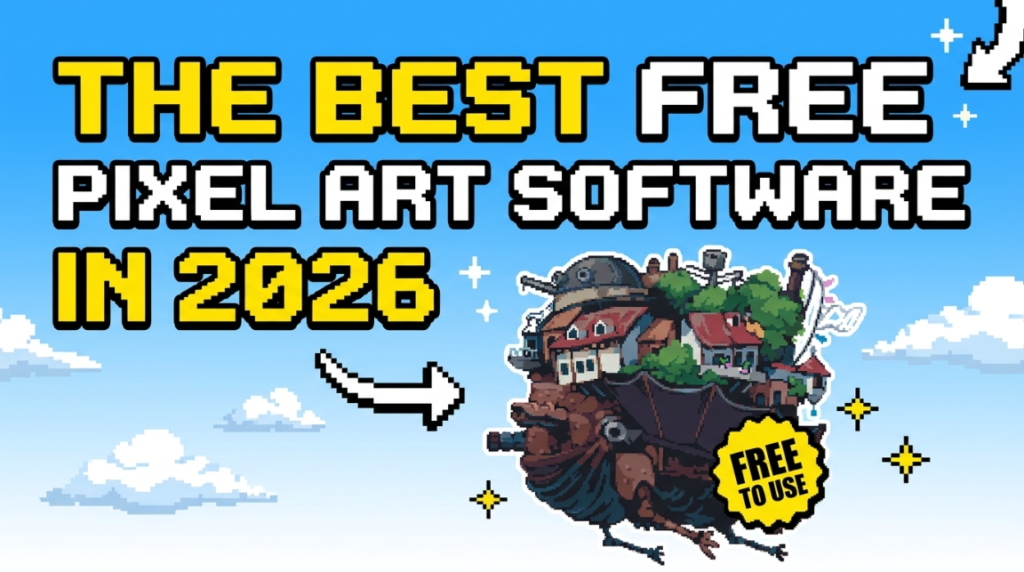
Pixel art has one of the healthiest free tool ecosystems in digital art — you do not need to buy anything to make professional sprites.
Pixelorama
Free, open source, and — fittingly — built in Godot. It covers sprite editing, animation with onion skinning, tilemap support and palette management. Cross-platform, including a browser version.
For anyone making a 2D game, particularly in Godot, this is the natural starting point and increasingly the default recommendation.
LibreSprite
An open-source fork of Aseprite from when it was freely licensed. Familiar workflow, animation timeline, onion skinning. If you want Aseprite’s approach without the purchase, this is it.
Krita
Not pixel-art specific, but free, powerful and perfectly capable of sprite work — with far better painting tools if your style sits between pixel art and illustration.
Piskel
Browser-based and requires no installation. Limited for large projects, but excellent for quick sprites, learning, or working on a machine where you cannot install software.
Is Aseprite Worth Paying For?
Aseprite remains the industry standard for a reason — its animation workflow is exceptional and it is a modest one-time cost. But the honest answer is that Pixelorama and LibreSprite are close enough that nobody is blocked by using them.
Start free. Buy Aseprite when you can name the specific feature you are missing.
Free Sprite Assets
Kenney and OpenGameArt both offer large CC0 sprite libraries — useful for prototyping while you build your own art, and both are catalogued in our resources directory.