Blender 5.2 LTS introduced hair and cloth simulation built on Geometry Nodes, using an XPBD solver node. It is experimental, and it is the most significant change to Blender physics in years.
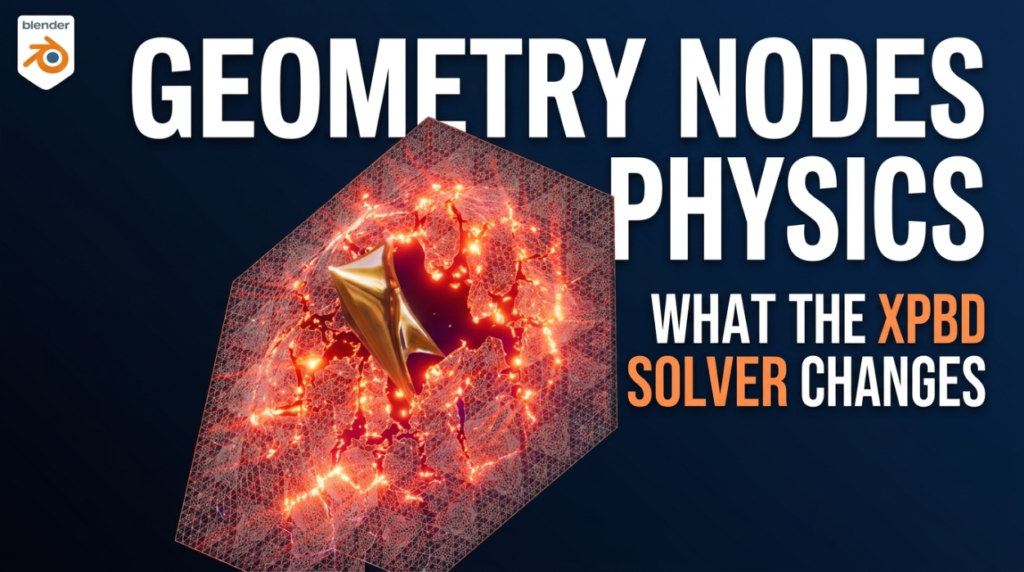
What XPBD Means
Extended Position-Based Dynamics. Rather than computing forces and integrating them, position-based methods move points directly and then enforce constraints — keep these two points this far apart, keep this angle within range.
The practical consequences are stability and speed. Position-based solvers rarely explode the way force-based ones do, and they handle large timesteps better. It is why the approach dominates real-time cloth in games.
Why Putting It in Nodes Matters
Traditional simulation is a black box with sliders. You get the behaviour the developers designed, tuned through parameters, and when a shot needs something the solver was not built for you fake it.
As nodes, the constraints are exposed. Blender ships cloth and hair dynamics assets built around the solver, but a technical artist can edit those constraints or build a system from scratch.
That is the difference between using a simulation and authoring one.
Who This Is Actually For
Technical artists and TDs, initially. If you want cloth that drapes, the existing cloth modifier already does that and is not experimental.
The node-based system pays off when you need behaviour the standard solver will not give you — stylised cloth that ignores physics in a specific way, hair that responds to something other than gravity, or a constraint system tied to your own logic.
Experimental Means Experimental
Do not build a deadline around it. Experimental features in Blender change between releases, and node interfaces in particular get reorganised as designs settle.
Prototype with it, learn the concepts, and keep production work on the stable cloth modifier until the system leaves experimental status.
The Broader Direction
This is part of a consistent pattern in Blender: capabilities that were once fixed systems get re-exposed as nodes. Modifiers became Geometry Nodes. Now physics is following.
For anyone weighing whether Geometry Nodes is worth learning, this is a fairly clear answer — it is becoming the layer everything else is built on.
More in our Blender 5.2 feature guide.