Every so often, a project lands on r/blender that makes the whole community stop scrolling. This week it was a procedural galaxy generator shared by Blender artist Petrundiy2, whose post — boldly titled as possibly one of the most realistic procedural galaxy generators for Blender — racked up over 700 upvotes in short order. Having looked at the renders, we think the confidence is justified.
What Makes This Galaxy Generator Special?
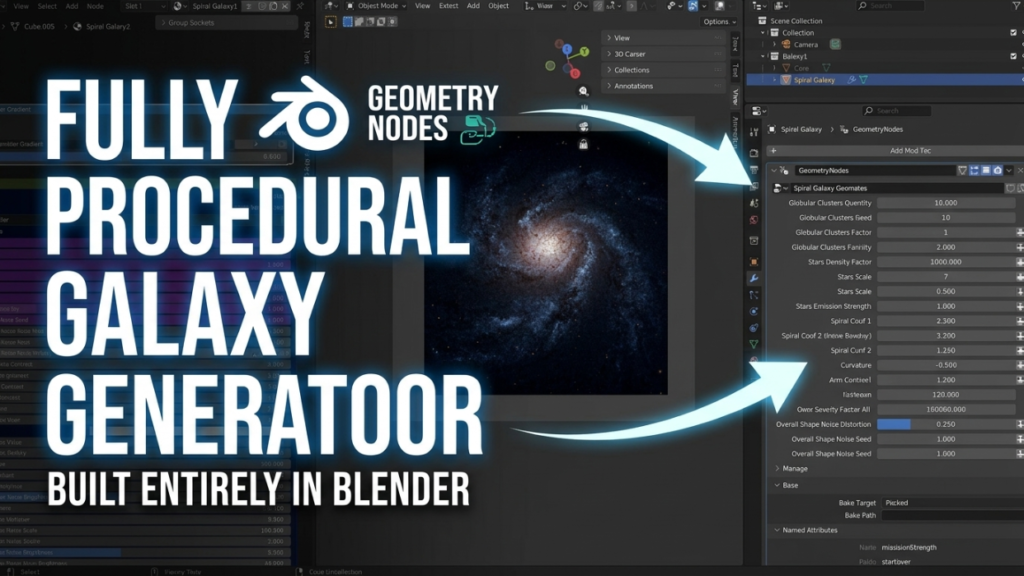
The headline feature is right there in the name: everything is 100% procedural. No image textures, no third-party add-ons, no baked simulations. The entire galaxy — spiral arms, dust lanes, nebulae, star fields — is generated inside Blender using nothing but native shader nodes and Geometry Nodes.
According to the creator, the system took months of tinkering and polishing. Under the hood, it combines two core techniques:
- A procedural volumetric shader that handles the glowing gas, dust lanes, and absorption patterns that give real galaxies their depth and structure.
- Geometry Nodes for star distribution, scattering millions of stars as emissive points and placing globular clusters around the galactic disc — just like the real thing.
Deep Customization, Zero Textures
Because the whole setup is procedural, nearly every visual property is exposed as a control. Users can dial in the number of spiral arms, push and pull the overall distortion of the galaxy, reshape the dark absorption-line pattern, and art-direct the nebulae — all without touching a single texture map.
When another Redditor asked how the dust holds up in close-up shots, the creator explained the approach: procedural volumetrics for the dust and gas, with the stars rendered as emissive particles. That means the galaxy stays resolution-independent — you can fly a camera straight through it without textures falling apart.
Performance Notes
Procedural does not mean free, of course. The creator notes that once the star count climbs to around 15 million points, scattering and render preparation start to slow down noticeably, with CPU speed being the main bottleneck. For most shots, though, you will never need that many stars — and the trade-off buys you infinite variation from a single .blend file.
What’s Next for the Project
Right now the generator produces unbarred spiral galaxies, but the creator has confirmed that additional presets — think barred spirals and other galaxy types — are on the roadmap. A tutorial covering the shader approach is already available, and the full project file can be picked up on the creator’s Gumroad.
Why This Matters for 3D Artists
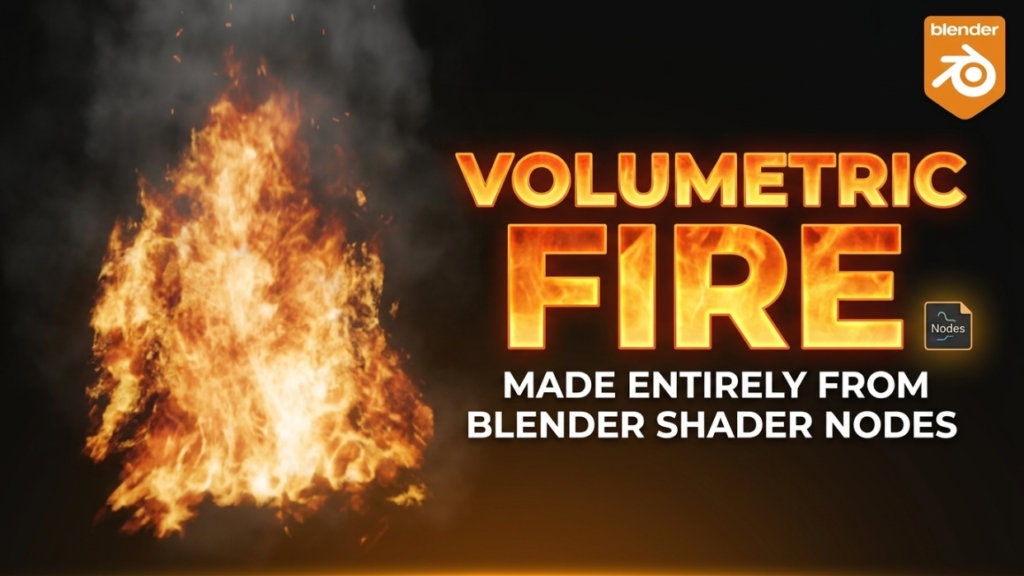
Projects like this are a masterclass in what Blender’s procedural toolset can do in 2026. The combination of volumetric shading and Geometry Nodes point scattering is the same recipe behind modern fire systems, cloud generators and large-scale environment tools — applied here at a literally astronomical scale. If you are learning Geometry Nodes, studying setups like this one is one of the fastest ways to level up.
Check out the original post and the full image gallery on r/blender here, and show the creator some love. All credit for the project and renders goes to Petrundiy2.